
ExxonMobil has announced the purchase of Superior Graphite’s synthetic graphite business, a move that gives the oil and chemicals giant a direct role in the fast-growing battery supply chain. The deal, revealed on 9 September 2025, will give ExxonMobil Superior Graphite’s technology and U.S.-based assets, along with select international offices.
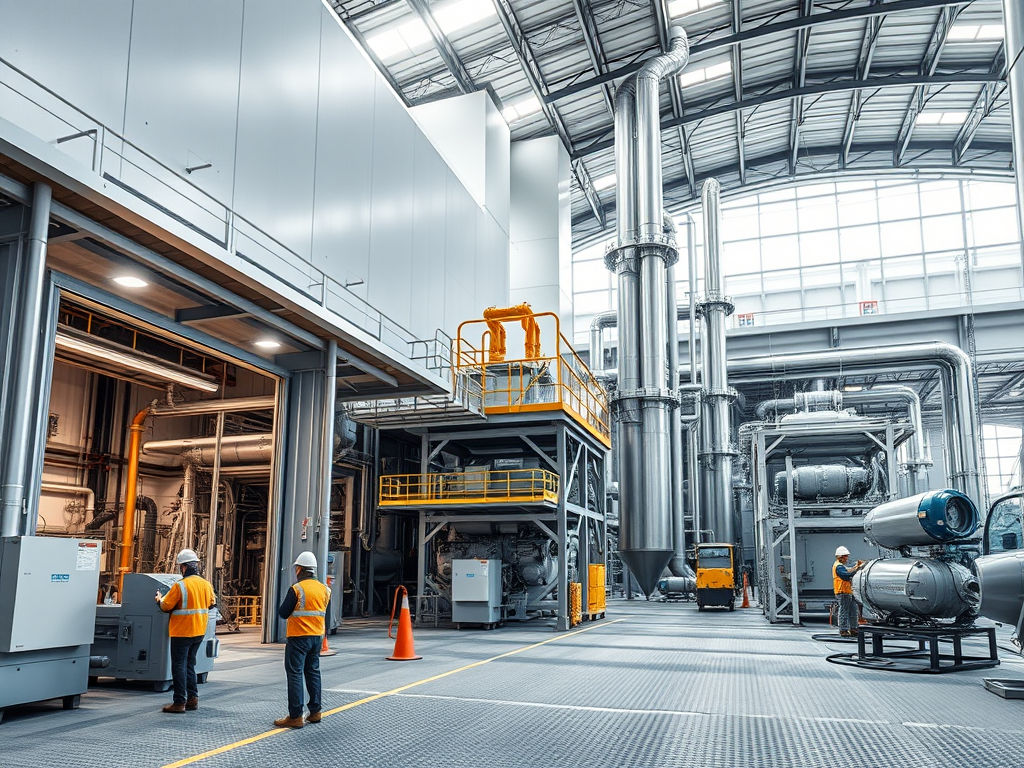
Superior Graphite has been around since 1917. The Chicago-based company first built its reputation on purifying natural flake graphite, later developing its own continuous high-temperature process to upgrade both natural and synthetic material. Its plants in Kentucky and Sweden can reach battery-grade purity without acid leaching, a technology Superior claims uses 70% less electricity and space than conventional methods while cutting emissions by about 85%. In 2023 the company outlined a plan to invest $180 million in Kentucky to lift battery anode output to 24,000 tons per year. Overall, it operates more than 80,000 tons per year of thermal purification and graphitization capacity.
The Hopkinsville plant, a 46,000 sq. ft. facility opened in 2019, was built to focus on synthetic graphite for lithium-ion battery anodes. The Sundsvall, Sweden plant complements it by handling both natural and synthetic graphite purification, with a reported capacity of several thousand tons per year. It has been used not only for industrial-grade products but also for pilot-scale anode material, serving as a European base for Superior’s battery-related development. Together, these plants gave Superior a footprint on both sides of the Atlantic.
ExxonMobil, for its part, has been moving steadily into battery materials. In 2023 it bought lithium-rich acreage in Arkansas, aiming to produce enough lithium for 1 million electric vehicles annually by the early 2030s. Now, with Superior Graphite, Exxon adds synthetic graphite to its portfolio, being the dominant material in lithium-ion battery anodes.
The strategic rationale is clear.
First, Exxon is securing a position in the anode market. By producing synthetic graphite, it places itself directly in the EV battery supply chain that is growing as transport shifts away from oil.
Second, Exxon can tie this business to its own feedstocks. High-grade synthetic graphite is usually made from petroleum needle coke, a by-product of refining. Exxon controls large streams of such carbon-rich by-products. Exxon also says its own R&D has found ways to modify carbon structures to create next-generation graphite that could deliver up to 30% more range and faster charging in EVs.
Third, the move aligns with U.S. policy. The Inflation Reduction Act requires 100% of battery anode and cathode components to be made in North America by 2029. At the same time, the U.S. has imposed aggressive anti-dumping duty on Chinese synthetic graphite. Local production is no longer just an option but a requirement for automakers and battery plants in the U.S. Exxon’s timing is well suited: the Hopkinsville plant is planned to be at full commercial scale by 2029, right when the new rules take effect.
Fourth, diversification. Exxon projects that its low-carbon businesses, including lithium and graphite, could generate $20 billion in new earnings by 2030. By entering the graphite market, Exxon adds another growth line in a sector where total battery demand is forecast to exceed $100 billion by 2035. This also improves the company’s image, showing investors and policymakers it is not only tied to fossil fuels but also contributing to cleaner transport and energy storage.
Finally, speed. Building a synthetic graphite operation from scratch would take years. By buying Superior Graphite, Exxon gains a running facility, proven processes, technical staff, and customer relationships. Superior had already started expanding toward 24,000 tons per year. Exxon can scale this further with its own capital.
The purchase price has not been disclosed, but given Superior’s mid-sized scale, the cost is modest compared to Exxon’s $400+ billion market value. For Exxon, this is a low-risk entry into a new business that could become central in the next decade.
In short, ExxonMobil is turning a century-old specialty graphite producer into the launch pad for its synthetic graphite ambitions. For Exxon, the deal is both offensive, capturing a growth market with in-house feedstocks and scale, and defensive, ensuring relevance in a world where electric vehicles will steadily cut oil demand.

Leave a Reply