
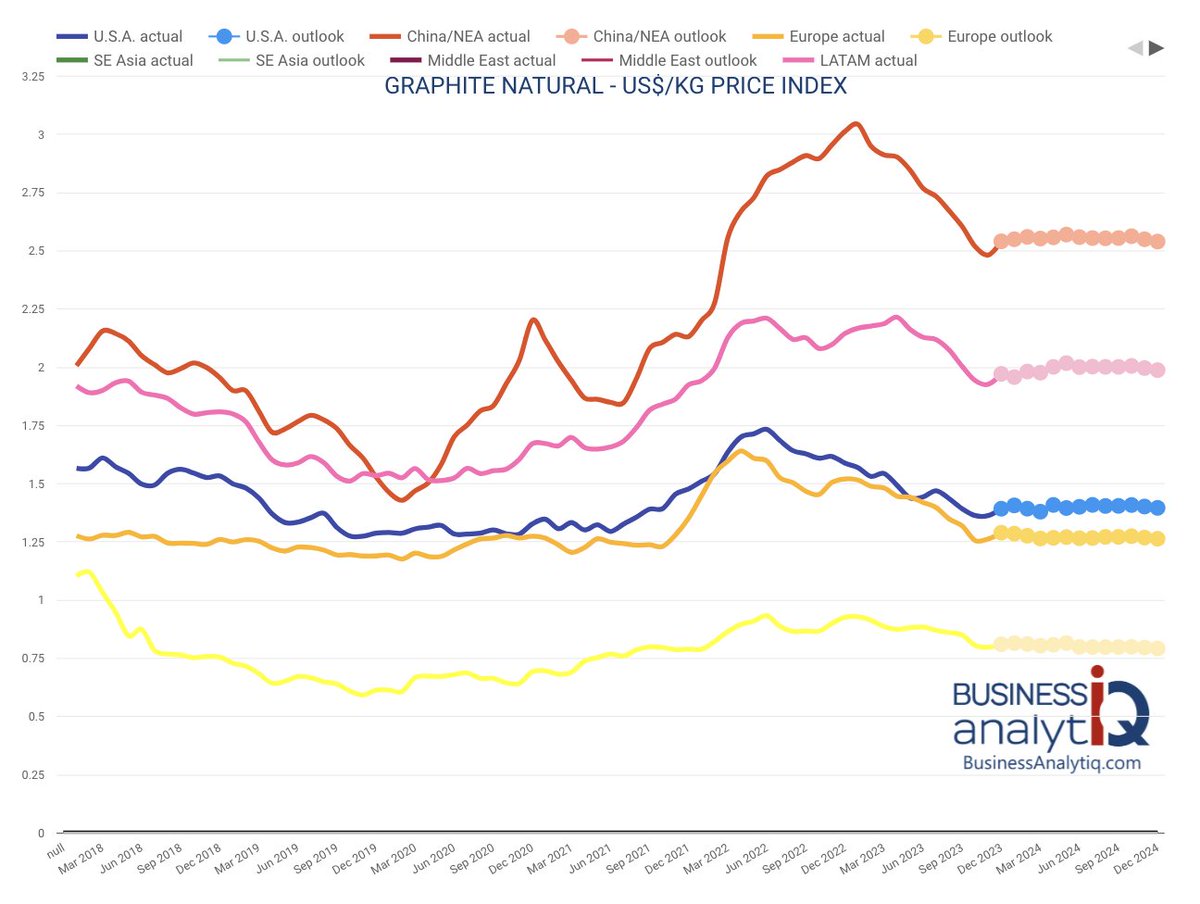
2023 was a tough year for everyone involved in electric vehicle (EV) materials, and graphite was no different. We saw a significant shift in the demand and pricing of graphite due to changing market dynamics. Here’s a recap of last year’s key trends and what we might expect as we move through 2024.
Last year, the growth rate of EV sales in China slowed down, significantly impacting the demand for graphite, which is essential for EV battery anodes. The steel industry also pulled back, contributing to a less voracious appetite for graphite compared to 2022. Additionally, a glut in anode capacity, a hangover from the 2022 EV boom in China, didn’t help either.
In terms of pricing, China’s flake graphite prices dropped throughout 2023, although they did start to rebound slightly from their low of around $550 per ton. The price for uncoated spherical graphite in China dipped to $2,200 per ton due to oversupply. Synthetic graphite wasn’t spared from the downturn either, affected by the slower demand.
One notable trend in 2023 was the growing popularity of synthetic graphite in China. With energy costs falling and new capacity coming online, synthetic graphite prices decreased, bringing them closer to those of flake graphite. This shift led anode producers to favor synthetic over spherical graphite, further dampening demand for the natural form.
Late in the year, the EU named synthetic graphite a critical material under its Critical Raw Materials Act. And in a significant move, China introduced temporary export permits for some graphite products starting December 1, 2023, injecting uncertainty into the market and pushing prices up slightly.
Looking ahead to the second half of 2024, most analysts are optimistic. They predict a balanced graphite market with potential for price recovery from last year’s lows. UBS expects graphite prices to surge 50% from their 2023 lows, forecasting significant demand growth for natural graphite throughout the decade. Others, like Macquarie Research, anticipate graphite deficits starting this year and worsening by 2030.
The long-term outlook remains bullish, with massive increases in global EV sales and energy storage demands projected to drive up graphite needs substantially. With deficits expected to deepen post-2025, the coming years could be much brighter for the graphite sector, especially for low-cost producers who can integrate from flake to spherical graphite production.
For those in the graphite business, aligning with regulations like the U.S. IRA and the EU’s CRMA could provide a crucial competitive edge. We’ll keep a close eye on how these and other developments impact the graphite industry in 2024 and beyond.
Leave a Reply